
Commercial Fencing for Garland's Warehouses, Yards, and Industrial Sites
Chain link security perimeters, ornamental iron frontages, and commercial gate systems for the warehouses, equipment yards, fleet lots, and industrial properties along Garland’s I-30, Northwest Highway, and Belt Line corridors.
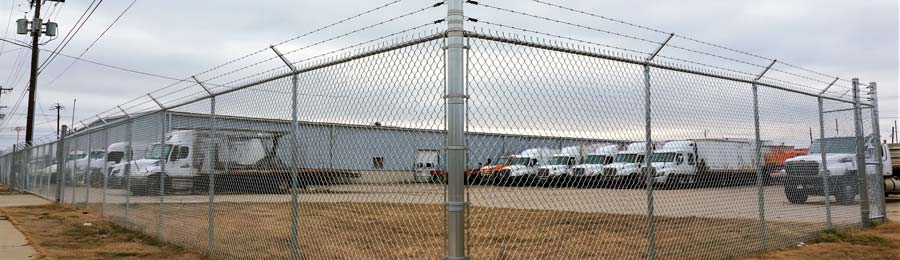
Garland Is a Working City, and Its Fences Show It
Commercial fencing in Garland is mostly a security and perimeter business, because Garland is mostly a working city. The eighth-largest in Texas, it carries a real base of manufacturing, warehousing, distribution, and light industry along I-30, Northwest Highway, and Belt Line Road, and those properties need fencing that does a job: keep equipment yards secure, define a property line that a fleet and a forklift respect, and control who gets through the gate. That is a different problem from a back-yard fence, and it calls for heavier material, longer runs, real gates, and an installation that works around a business that does not stop running while the fence goes in.
At Garland Fence Company, we spec commercial work to what the property actually has to withstand, not to a residential standard stretched to fit a business. The two materials that cover most commercial jobs here are chain link and ornamental iron, and they split by purpose. A chain link fence in a commercial gauge is the workhorse for the secured perimeter, the equipment yard, and the construction enclosure, where the priority is a strong, durable boundary and barbed or razor topping is an option where deterrence above the line matters. A wrought iron fence goes where a frontage has to present, an office, a showroom, a building face on a main corridor, giving a finished, secure boundary that reads as professional from the street.
Why Commercial Spec Is Not Just Residential, Scaled Up
The difference between commercial and residential fencing is not only size, it is specification. Commercial chain link uses heavier 9-gauge fabric where residential runs 11-gauge, on larger line posts and heavier terminal posts at corners and gates, because a perimeter that sees daily traffic, equipment, and impact is working far harder than a back-yard enclosure and has to hold its tension for years under that load. Posts are set deeper and in larger concrete footings to carry the longer spans and the heavier gates. Hardware is rated for the cycle counts a commercial gate sees in a week, not a season. The reason to get this right is simple: residential-grade material installed at commercial scale fails ahead of schedule, and a failed perimeter has to be torn out and redone, on the property’s operations and security rather than on a convenient timeline. We spec commercial-grade on every commercial job for exactly that reason.
What Gets Fenced on a Garland Commercial Property
The jobs come in a handful of recognizable shapes. Secured perimeters around a building, a lot, or a full site, controlling access and marking the boundary. Equipment and material yards, where the fence keeps expensive inventory in and trespassers out. Fleet and vehicle storage, where the gate has to handle trucks all day. Construction enclosures, temporary but real security while a project is underway. Loading dock and utility-area screening, often a mix of chain link and solid panel depending on what needs to be hidden. And the street-facing frontage of an office, showroom, or business that wants a finished, controlled entrance. Most commercial projects are some combination of these, and the estimate starts by walking the site to see which ones apply and where the gates need to go.
The Perimeter a Garland Work Site Needs
Gates and Access Control as Part of the Perimeter
On a commercial property the gate is where the security actually happens, so it is designed with the fence, not bolted on after. Vehicle openings on Garland commercial sites commonly run 14 to 24 feet for delivery and service-truck access, and a slide gate is usually the right call there, since it needs no room to swing and stands up to the high-cycle daily use a commercial entry sees. The operators are rated for far higher cycle counts than a residential gate, and the access control, keypad, card reader, intercom, or vehicle loop detector, is specified together with the gate so the opening is framed for the hardware from the start. The full range of automatic driveway gates and operator options carries up to the commercial scale, and we design the gate and its access control as one scope rather than two separate projects.
Installing Without Shutting the Business Down
Most commercial fence work happens on a property that is still open and running, and the installation is planned around that. We phase the work to keep access routes open and operations moving, hold security continuity on a perimeter that has to stay secure during the job, and sequence around other trades on an active construction site, with the plan documented in writing before anyone starts. Commercial permitting is heavier than residential, varying by fence height, setback from property lines and right-of-way, and zoning, and taller or more complex runs can call for a site survey or engineering documentation. We handle the permit applications and confirm the requirements and lead times with the city as part of the estimate, so the permitting is part of the schedule rather than discovered mid-project.
Every commercial project starts with a site walk, because the spans, the gates, the access control, and the operating schedule all set the scope, and a site visit is where the specification and the timeline get built around the property you actually have.
Commercial Fence Questions From Garland Property Managers
What kind of fence works best for a commercial property in Garland?
It depends on what the fence has to do. For a secured perimeter, an equipment yard, a fleet lot, or a construction enclosure, commercial-gauge chain link is the standard, because it gives a strong, durable boundary at a working price and accepts barbed or razor topping where extra deterrence is needed. For a street-facing frontage, an office, a showroom, or a building face on one of Garland’s main corridors, ornamental iron presents a finished, professional boundary while still controlling access. Many Garland properties use both: iron where the public sees it, chain link around the working areas behind. We match the material to each part of the property during the site walk.
How is commercial fencing different from residential fencing?
Commercial fencing is built to a heavier specification, not just a larger size. Commercial chain link uses 9-gauge fabric against the 11-gauge typical in residential work, on larger line and terminal posts, with posts set deeper in bigger concrete footings to carry longer spans and heavier gates. The hardware is rated for the cycle counts a commercial gate runs in a week. Those specs exist because a commercial perimeter works far harder than a back-yard fence, and residential-grade material installed at commercial scale fails early. We spec commercial-grade on every commercial job so the fence holds up to the use it will actually see.
What security options go beyond a standard chain link perimeter?
Several options layer on top of a standard perimeter. Barbed wire or razor wire topping adds deterrence above the fence line on security-critical sites. Taller fabric and tighter mesh make a perimeter harder to climb or cut. Privacy slats or solid panel screen the inside of a yard from view, which removes the ability to case what is stored there. And at the gate, access control, keypad, card reader, or loop detector entry, controls and logs who comes through. We assess the security level the property needs during the estimate and spec the perimeter and the gate to match, rather than defaulting to one standard for every site.
Can you install while my Garland business stays open?
Yes, and most commercial jobs are done exactly that way. We phase the installation to keep your access routes open and your operations running, and on a perimeter that has to stay secure during the work, we sequence it so the property is never left open. On an active construction site, we coordinate around the other trades. The phasing plan is set during the estimate based on your layout and your operating schedule, and for phases that genuinely cannot happen during business hours, after-hours or weekend scheduling is an option. The plan is documented in writing before the work starts.
Do commercial fence projects in Garland need permits?
Most commercial fence installations in Garland require a permit, and the commercial process is more involved than residential. Requirements vary by fence height, the setback from property lines and public right-of-way, and the property’s zoning, and taller or more complex installations can call for a site survey or engineering documentation. We handle the permit applications as part of the project and confirm the requirements and current lead times with the city during the estimate, so the permitting is built into the schedule from the start rather than holding up the install later.
How much does commercial fencing cost in Garland?
Commercial fencing cost in Garland varies widely with the material, the gauge, the height, the total linear footage, the number and type of gates, and the access control involved. A commercial chain link perimeter is the most cost-effective option per foot, while ornamental iron frontages and integrated access-control gate systems run higher. Long runs, heavier security specs, and automated commercial gates all move the number. Because commercial scope ranges so far, there is no useful per-foot rule of thumb the way there is for a back-yard fence, and an accurate figure comes from a site visit that measures the runs and prices the gates and access control specifically. Every commercial estimate is based on that walk.