
Fence Staining and Sealing for Garland's Graying Wood Fences
Professional staining and sealing for Garland wood fences, protecting sound cedar from North Texas UV and moisture and bringing color back to a weathered fence that has gone gray but still has good years left in it.
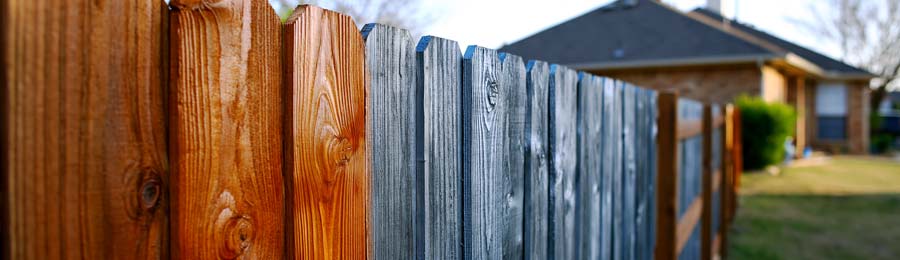
Whether a Gray Garland Fence Is Worth Staining
Drive any older Garland neighborhood and most of the wood fences have gone the same silver-gray. The question worth asking before fence staining starts is whether that gray fence is still worth saving, because the answer changes the whole decision. Gray on its own is just surface weathering, UV and moisture breaking down the top layer of the wood, and a fence that is gray but still solid underneath is the best return staining ever delivers: a coat of penetrating stain stops the clock and adds years to a fence that would otherwise be weathering toward replacement. A fence that has moved past gray into deep checking, splitting, and soft, rotting boards is a different story, and on that one stain is lipstick. We tell you which fence you have before any product is bought.
At Garland Fence Company, we look at the wood before we recommend a finish. The test is simple: gray that brushes and washes off the surface to reveal sound wood underneath is a fence worth staining, while wood that is spongy at a screwdriver tip, splitting along the grain, or pulling apart at the fasteners has lost the structure that stain protects. Most of Garland’s gray fences fall on the savable side, especially the cedar ones, which is why staining is the move we recommend far more often than replacement on a fence that has only gone gray. When the wood has genuinely failed, we say so rather than apply a finish that buys only a season.
Stain, Sealer, or Paint for a Garland Fence
The three finishes do different jobs. A penetrating stain soaks into the grain and adds both color and protection against UV and water, and a semi-transparent stain that lets the grain show is the practical choice for most Garland wood fences, since it protects the wood, looks like wood, and is easy to recoat on schedule. A sealer puts a clear moisture barrier on the surface without much color change, which suits a newer fence a homeowner wants to keep natural, though a sealer with no UV protection guards against rain but not against the sun that does most of the damage here, so the label is worth reading. Paint is the one we steer most people away from on a fence: it sits on top as an opaque film rather than soaking in, and when it starts to peel it has to be stripped before it can be redone, which is far more work across a full fence run than recoating a stain. For Garland conditions, an oil-based penetrating stain holds up best, since it protects from inside the grain rather than as a surface film that can crack under the UV load.
How Often a Garland Fence Needs It
An existing Garland fence is usually ready for a fresh coat every two to three years, and the fence tells you when. Water that used to bead on the boards starts soaking in, the color has faded, and the silver-gray creeps back across the board faces. A new fence is the one exception to the every-few-years rhythm, since green cedar has to dry for 30 to 60 days before it will take stain at all, which is covered on the wood fence installation page. Staying roughly on that two-to-three-year schedule is the surest way to keep a wood fence out of the replacement cycle, because every coat applied before the wood starts to check is a coat doing its job.
Gray Doesn't Always Mean Gone
Why Prep Decides Whether the Stain Lasts
On a weathered Garland fence, the prep is most of the job, and skipping it is the single most common reason a stain that looked good in year one looks bad in year two. Stain only bonds to clean, sound wood, so a gray fence has to have the loose surface fiber, dirt, and mildew washed off first, usually with a low-pressure wash, and then be left to dry fully before a drop of stain goes on. A fence stained over damp wood or over a layer of weathered grime is getting a finish that sits on top of the problem instead of soaking into the wood, and it will peel or wear off early. That drying step is why timing matters: the surface needs 24 to 48 hours without rain before staining, and the fence needs to be genuinely dry through, not just dry to the touch.
The Right Season, and What Else We Catch on the Fence
Spring and fall are the right windows for staining in Garland, when temperatures sit between 50 and 90 degrees and the stain has time to penetrate and cure instead of flashing off in the heat. Summer staining works only early in the morning, before the sun bakes the boards and dries the stain on the surface before it can soak in. The other advantage of having a crew on the fence is that they are looking at the whole structure while they work, so a post that has started to lean, a cracked rail, or a gate pulling from its hinges gets flagged, and a fence repair caught while we are already on-site is far simpler than scheduling it as a separate trip later. Stain protects the surface, but it only makes sense to protect a fence whose bones are still good.
Every staining estimate starts by reading the actual condition of the wood, because a sound fence and a failing one call for completely different recommendations, so a look at the fence comes before any color or quote.
What to Know About Staining a Garland Fence
Can my gray, weathered Garland fence be brought back with staining, or is it too late?
Often, yes. Gray by itself is just surface weathering, where UV and moisture have broken down the top layer of the wood, and underneath that gray the boards are frequently still sound. A fence like that cleans up and takes a fresh penetrating stain that restores the color and stops the degradation, adding years to the fence. The test is what is under the gray: if the wood is solid, not spongy, not split through, and not pulling apart at the fasteners, staining is worth doing and is the far cheaper path than replacement. If the boards have checked deeply, gone soft, or started to rot, stain will not bring those back, and we will tell you that rather than sell a coat that hides the problem for a season.
How often does a wood fence need staining in Garland?
An existing wood fence in Garland generally needs re-staining every two to three years. The fence signals when it is due: water stops beading and starts soaking into the boards, the color fades, and the silver-gray weathering creeps back onto the board faces. Staying on that schedule, rather than waiting until the fence looks bad, is what keeps a wood fence reaching its full lifespan instead of aging out early. A brand-new fence is the exception, since green cedar has to cure for 30 to 60 days before it will hold stain at all.
What is the difference between staining, sealing, and painting a fence?
Stain penetrates the wood and adds both color and UV and moisture protection, and a semi-transparent stain that lets the grain show is the practical choice for most Garland fences. Sealer puts a clear moisture barrier on the surface without much color change, which suits a newer fence kept natural, but a sealer without UV protection guards against rain and not against the sun, so the label is worth checking. Paint forms an opaque film on top of the wood rather than soaking in, and once it peels it has to be stripped before redoing, which is a lot of work on a full fence. For Garland conditions, an oil-based penetrating stain holds up best, because it protects from inside the grain rather than as a surface film that can crack.
When is the best time of year to stain a fence in Garland?
Spring and fall are the best windows for staining in Garland, when the temperature sits between 50 and 90 degrees so the stain can penetrate and cure properly. Summer staining is possible but only works early in the morning, before the sun heats the boards and dries the stain on the surface before it soaks in, which leaves uneven coverage and a shorter-lived finish. The fence also has to be dry, with 24 to 48 hours of no rain beforehand, and a new fence needs its 30-to-60-day cure regardless of the season.
Can I stain the fence myself, or is professional staining worth it?
You can stain a fence yourself, and the staining itself is not the hard part. The prep is, and it is where most do-it-yourself jobs fall short. A fence has to be cleaned of weathered fiber, dirt, and mildew and then dried fully before staining, and a coat applied over a poorly prepped surface peels or wears off well ahead of schedule, which means doing it all again sooner. A professional job covers the prep, applies the right product evenly, and handles the full fence in a fraction of the weekends it takes by hand. Whether it is worth it comes down to the size of the fence and how much of your own time the prep would take.
How much does fence staining cost in Garland?
Fence staining cost in Garland generally runs about $2 to $4 per linear foot for a standard residential job, with the final figure driven by the height of the fence, the condition and prep the wood needs, the product chosen, and whether one side or both sides are being done. A heavily weathered fence that needs significant cleaning and prep costs more than a fence in good shape getting a maintenance recoat. Because the prep is most of the work and the condition varies fence to fence, the accurate number comes after looking at the wood. Even at the higher end, staining costs a fraction of replacing the fence, which is the whole point of keeping up with it.