
Wrought Iron Fence Installation That Stands Up to Garland Storms
Powder-coated ornamental iron and steel fencing for Garland front yards, pool enclosures, and commercial perimeters, built to outlast the hail and skip the maintenance that wood fencing demands.
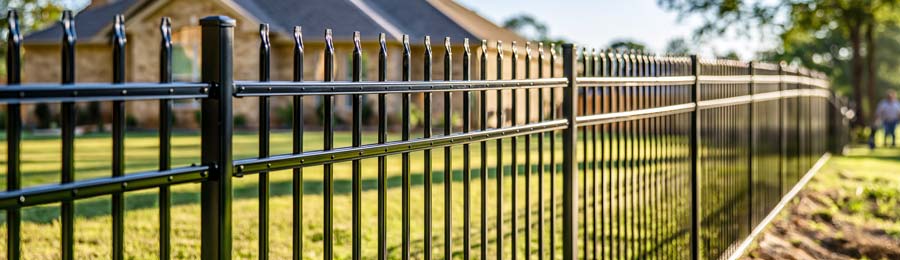
Why Garland Homeowners Move From Wood to Iron
Plenty of Garland homeowners come to wrought iron fence installation after replacing one wood fence too many. The 1970 to 2005 brick homes that make up most of the city were built when a cedar fence was the default, and a generation of those fences has now been put up, blown down, stained, and put up again. Iron changes the math. It does not warp, it does not need sealing, and it does not come apart in the hail and straight-line wind that flatten a wood panel. On a front yard or a property line, an iron fence is often the last fence a homeowner installs in that spot.
As a Garland Fence Company, we install ornamental iron and steel for the three jobs it does best in this market: defining a front yard on an older brick home without closing it off, enclosing a pool to the safety code Texas requires, and running a secure perimeter along the kind of commercial frontage Garland has on I-30, Northwest Highway, and Belt Line Road. Each one asks something different from the fence, and the estimate starts from what the property actually needs.
How Iron, Steel, and Aluminum Differ for a Garland Yard
Most fencing sold as wrought iron today is fabricated from galvanized steel with a powder-coat finish rather than hand-worked iron, and that is a better product than the name suggests: more consistent, more rust-resistant, and able to hold a finish for decades. True heavy-gauge iron still has a place on commercial gates and large estate runs where structural mass is part of the design. Aluminum reaches nearly the same look at a lighter weight and will not rust at all, because the resistance is in the metal rather than a coating, which makes it the low-maintenance pick for pool enclosures and front-yard panels. For most Garland homes the choice comes down to how much the fence has to carry and how much per linear foot the budget allows, and we lay both out on the estimate before anything is fabricated.
Where Iron Earns Its Place on a Garland Property
Front-yard ornamental fencing is the most common iron job on Garland’s established streets, where a four-foot flat-top or spear-top panel gives a brick ranch a finished street edge without walling off the yard. Pool enclosures are the next, since Texas requires a barrier of a set height with self-closing, self-latching gates, and iron meets that code while keeping the water visible from the house. For larger lots and the commercial frontage along the city’s main corridors, iron runs as a security perimeter, and a commercial fencing estimate covers the heavier gauges and gate systems those sites call for. Where a driveway is involved, the fence ties into matching custom iron gates so the whole run reads as one system rather than parts bolted together.
The Fence Still Standing After Hail Season
The Finish Decides How Long Garland Iron Lasts
Iron and steel only rust where bare metal meets moisture, so on a powder-coated fence the whole game is protecting the finish. Powder coat is applied electrostatically and cured under heat, which bonds it far harder than paint and lets it shed Garland’s 39 inches of annual rain for years. The places to watch are the cut edges, the weld points, and any spot a mower or string trimmer chips, because that is where bare steel gets exposed. A fence inspected once a year and touched up with a rust-inhibiting primer at the first chip will outlast one left until the rust shows by a decade or more. Black and dark bronze are the most common finishes on Garland homes and the most forgiving as the Texas sun works on them over the years.
Setting Heavier Iron Posts in Garland Clay
Iron and steel posts carry more weight than wood, and a gate post swinging a heavy iron gate carries more still, which is what makes the footing matter in Garland’s expansive clay. Those posts are set in concrete at a depth and diameter sized to the load, so the gate keeps its alignment through the wet-and-dry movement that shifts the soil across a Texas year. On a sloped lot, iron panels can either step down in even increments or be raked to follow the grade, and we set the line to the yard rather than forcing a flat panel onto a slope. Where a driveway gate is part of the plan, that gate and its automatic driveway gates hardware are sized to the opening before the posts go in, so nothing has to be retrofitted later.
Every wrought iron estimate is measured on-site, because the gauge, the gate count, and the slope of the specific lot are what set the price, and a walk of the property is the only way to quote it accurately.
What Garland Homeowners Ask About Iron Fencing
Should I get wrought iron, steel, or aluminum for a fence in Garland?
For most Garland homes the real choice is between powder-coated steel, which is what almost all fencing sold as wrought iron actually is today, and aluminum. Steel is stronger and carries more visual weight, which suits heavier gates and commercial runs, but it relies on its powder-coat finish to keep rust away. Aluminum will not rust under any conditions because the resistance is in the metal itself, so it asks for less attention over the years and tends to cost less per linear foot. Heavy-gauge true iron still makes sense for large estate perimeters and oversized gates where mass is part of the design. We price the options side by side on the estimate so the decision fits the use and the budget rather than the label on the brochure.
Will an iron fence rust in Garland's weather?
A powder-coated steel or iron fence resists rust well in Garland’s climate, but it is not maintenance-free. Rust only starts where bare metal is exposed to moisture, which means the spots to watch are cut edges, weld points, and any place a mower or string trimmer chips the coating. Caught early and touched up with a rust-inhibiting primer, those spots never spread. Left until the rust is visible and staining the finish, the repair gets larger and the fence ages faster. An annual once-over and a quick touch-up is the whole maintenance routine, and aluminum skips even that, since it does not rust at all.
How much longer does an iron fence last than a wood one in Garland?
A wood fence in Garland typically runs 8 to 20 years depending on how well it is sealed and what the storms do to it. A powder-coated iron or steel fence that gets its finish touched up when needed will commonly last 30 to 50 years, and aluminum can go longer still. The bigger difference is what the years ask of you. Wood needs staining and sealing on a cycle and tends to be the fence that hail takes down, while iron mostly needs an occasional inspection. For a homeowner who has already replaced a wood fence once or twice, that gap in lifespan and upkeep is usually the reason iron wins out.
Does an iron pool fence have to meet a specific code in Garland?
Yes. Texas requires a barrier around residential pools, and Garland enforces it through the permitting process: the fence has to reach a set minimum height, the gaps between pickets are limited so a small child cannot pass through, and any gate has to be self-closing and self-latching with the latch placed out of easy reach. Ornamental iron and aluminum are popular for pool enclosures precisely because they meet that code while keeping the water visible from the house. We build pool fencing to the current requirements and confirm the specifics with the city on every pool job, since code details can change.
Can hail or storms damage an ornamental iron fence?
The hail and straight-line wind that routinely take down wood fence panels in Garland do very little to ornamental iron or steel. The open picket design gives wind almost nothing to push against, and the metal does not crack or split the way a wood board does under impact. A severe storm might chip the powder coat or, in a direct hit, bend a picket, both of which are straightforward repairs rather than a full replacement. For a lot of Garland homeowners that storm resilience is the main reason they switch, since it takes the fence out of the insurance-claim cycle that wood keeps landing in.
How much does wrought iron fence installation cost in Garland?
Ornamental iron and steel fence installation in the Garland and greater DFW area generally runs about $30 to $60 per linear foot installed, with aluminum often landing toward the lower end and heavy-gauge steel or custom panel styles toward the higher end. Gates add to the total based on size and whether they are manual or automated, and the slope and access of the yard factor in as well. Pool enclosures and commercial perimeters price differently from a simple front-yard run because of the code and gauge involved. Because the gauge, the gate count, and the lot all move the number, the only accurate figure comes from an on-site measurement of your property.