
Storm Damage Fence Replacement in Garland, From the Insurance Claim to the New Fence
On-site assessment, written documentation an adjuster can use, and full replacement for storm-damaged Garland fences, with a straight conversation about what to put back up so the next storm does not take it down too.
A Garland Storm Usually Finishes a Fence That Was Already Going
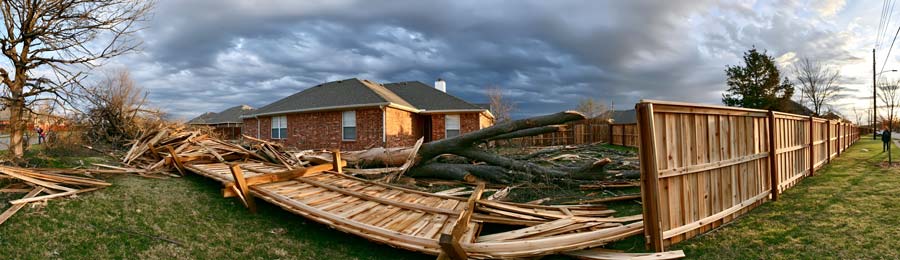
Storm damage fence replacement in Garland is rarely the story of a good fence brought down by a freak event. More often the storm finished a fence that was already on its way out: posts that had been heaving in the clay for twenty or thirty years, boards that had grayed and checked through a decade of summers, a structure the next strong wind was always going to take. That changes how to think about the replacement. You are not just standing the old fence back up, you are deciding what goes in its place, and in a part of Texas that sees hail and straight-line wind every season, the smart version of that decision is a fence built to survive the next storm, not just patched back to the one that just failed.
At Garland Fence Company, we run the whole thing from the assessment through the finished fence. The first visit documents the damage across the entire fence line, not just the section that is flat on the ground, because storm claims turn on what the adjuster can see was damaged and why. From there it splits into two tracks that run at once: the insurance side, where we provide the written assessment and estimate carriers ask for, and the build side, where you decide what goes back up. When the damage is contained and the rest of the fence is sound, that is a fence repair and not a replacement at all, and we will tell you so rather than write up a full replacement you do not need.
Photograph the Damage Before You Move a Thing
Before any cleanup, before dragging the panels off the lawn, photograph the damage exactly as the storm left it. This is the step most homeowners skip in the rush to secure the yard, and it is the one that matters most to the claim. An adjuster wants to see the fence down, the debris or the limb that caused it, and the condition of the posts at the ground line, all undisturbed. Once the panels are stacked and the yard is cleared, that evidence is gone and the claim gets harder to prove. A temporary barrier to keep pets and kids contained is fine and is usually covered as an emergency measure, so keep the receipts, but get the photos first.
What Your Policy Pays Depends on Two Letters
How much of the new fence your claim covers comes down to whether your policy pays actual cash value or replacement cost value, and on an older Garland fence the difference is large. An actual cash value policy pays what the fence was worth at the moment it fell, which on a twenty-five-year-old fence is the replacement cost minus decades of depreciation, often a fraction of a full new installation. A replacement cost value policy pays to put up a comparable new fence with no depreciation taken out. Knowing which one you carry before the adjuster comes out changes the whole conversation, and it is worth reading your declarations page or asking your agent. Either way, any upgrade beyond a like-for-like replacement, a tougher material or a taller line, is the homeowner’s to fund, so we write the estimate with the like-for-like number and any upgrade separated out, which keeps the claim clean.
Put the Next Fence Up for the Next Storm
Choosing a Fence That Survives the Next One
Since the claim is already replacing the fence, it is the moment to ask whether the same material is the right thing to put back. By how they handle Garland wind, the materials line up clearly. A chain link fence is the most wind-resistant of all, since the air passes straight through the mesh instead of pushing on it. Ornamental iron does nearly the same through its open pickets, which is why a wrought iron fence tends to ride out the hail and wind that flatten wood. A solid wood privacy fence presents the largest face to the wind of any common material, so on wood the post depth and concrete are what decide whether it stands, and a wood fence whose posts are set right survives storms that take down one set too shallow. None of this means everyone should switch off wood, only that the replacement is the one moment the choice is fully open, and we walk through it rather than defaulting to what was there.
Calling Early Beats Calling After the Approval
After a big storm rolls across Garland, every fence company’s schedule fills within days, and the homeowners who get in first are the ones who called before the adjuster came out, not after the claim was approved. Waiting until the check is in hand to start the estimate can add weeks to the timeline in the busy stretch after a storm, because the queue is already long by then. Getting the on-site assessment done early does two things: it puts the written documentation in the adjuster’s hands sooner, which can move the claim along, and it holds your place in the installation schedule. If the yard needs a secure boundary in the meantime, a temporary stake-and-mesh barrier keeps it contained while the permanent fence is scheduled.
Every storm replacement starts with an on-site assessment of the whole fence line and the written documentation a claim needs, so a call right after the storm is the first move, ahead of the adjuster and ahead of the rush.
Storm Claim and Replacement Questions in Garland
Will my insurance pay for a whole new fence or only part of it?
That depends on whether your homeowners policy pays actual cash value or replacement cost value, which is the single biggest factor in a fence claim. Replacement cost value pays to install a comparable new fence with no deduction for age, so the claim covers the new fence apart from your deductible. Actual cash value pays what the old fence was worth at the moment it fell, meaning the replacement cost minus depreciation, and on a fence that was twenty or thirty years old that payout can be a fraction of a new installation, leaving the rest to you. Check your declarations page or ask your agent which one you carry before the adjuster visits, because it changes the whole decision. We write the estimate so the like-for-like replacement is separated from any upgrade, which keeps the claim clean either way.
What should I do first after a storm damages my fence in Garland?
Photograph the damage before you move anything. Get the fence down on the ground, the debris or limb that caused it, and the base of the posts all in pictures while it is exactly as the storm left it, because once the yard is cleared that evidence is gone and the claim is harder to prove. After the photos, a temporary barrier to keep pets and children contained is reasonable and usually covered as an emergency measure, so keep the receipts. Then call for an on-site assessment, ideally before the adjuster comes out, so the written documentation is ready and you are in the installation queue early.
Can I switch to a tougher fence material when insurance is replacing it?
Yes. The insurance pays the like-for-like portion, replacing what you had with a comparable new fence, and you can put that toward a different material and cover the difference. A storm replacement is the natural moment to do it, since the fence is coming out anyway. Plenty of Garland homeowners use the occasion to move from wood to a more wind-resistant material, or to step up the spec on the wood so it stands through the next storm. We write the estimate with the covered like-for-like amount separated from the upgrade cost, so the claim stays clean and you can see exactly what the upgrade adds.
Which fence holds up best in Garland's storms?
By wind resistance, chain link leads, because the air moves through the mesh instead of pushing against it, which is why it rides out high wind better than any solid fence. Ornamental iron does nearly as well through its open pickets and shrugs off hail that splits wood. A solid wood privacy fence catches the most wind of any common material, so with wood the deciding factor is how deep and how well the posts are set, since a properly set wood fence survives storms that flatten a shallow-set one. Vinyl flexes under wind and holds up well on correctly set posts. The right answer depends on what the fence is for, and the replacement is the moment to weigh it.
How quickly can a storm-damaged fence be replaced in Garland?
It depends heavily on timing relative to the storm. In the calm stretches, a residential fence replacement is a matter of days from confirmed estimate to finished fence, with removal, post setting, curing time, and panel installation. In the rush right after a major storm, the schedule fills within days and lead times stretch, which is why calling early, before the adjuster rather than after the approval, gets you in the queue sooner. We are straight about current lead times on the assessment call, and a temporary barrier can secure the yard while the permanent fence is scheduled.
What will I pay out of pocket for a storm fence replacement?
Your out-of-pocket cost on a covered storm claim is usually your deductible, plus the depreciation gap if you carry actual cash value coverage rather than replacement cost value, plus the cost of any upgrade you choose beyond a like-for-like fence. A full residential fence replacement in the Garland area generally runs from the low thousands for a basic chain link or short wood run up through five figures for a long ornamental iron line, and the claim offsets the covered portion of that. Because the policy type and the scope drive what lands on you, the clearest picture comes from the written estimate set against your specific coverage.