
Fence Repair for Garland Storms, Aging Fences, and Everything Between
Board replacement, post re-setting, rail repair, gate rehanging, and storm damage service across Garland, with a straight read on whether your fence is worth repairing or has reached the point where replacing it is the better call.
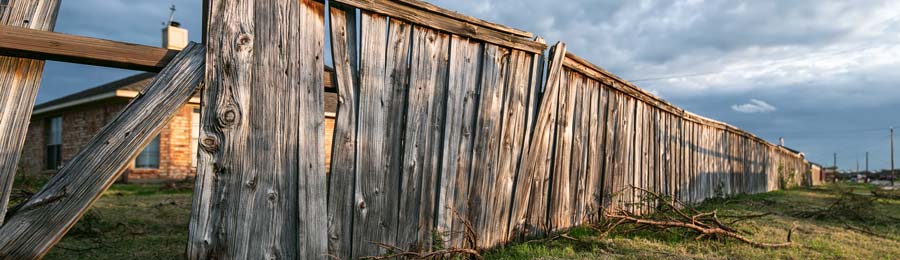
When a Garland Fence Is Worth Fixing, and When It Isn't
Most fence repair calls in Garland start the same way: a storm rolls through, a section comes down or a fence that has been leaning for a season finally gives, and the homeowner wants to know whether to fix it or replace it. The honest answer depends on the fence, and it is not always repair. On a fence with sound posts and damage limited to a few boards or a knocked-down panel, repair is the faster, simpler fix and we will tell you so. On a fence whose posts have been heaving in Garland’s clay for twenty-five years, repairing at the board level only treats the symptom while the real problem keeps moving underground. We give you the straight version either way, because a repair that fails within a year helps no one.
What makes that call answerable is looking below the boards. At Garland Fence Company, every repair estimate starts at the ground line, not the part of the fence you can see from the street. A fence can look thoroughly beaten at the board level, gray, split, and sagging, and still sit on posts that are plumb, firm, and solid where they enter the soil, which makes it a strong repair candidate. The opposite is also common: a fence that looks passable from the curb while two or three posts have already rotted or heaved at the base, which is a repair that will not hold. We check every post, not just the ones next to the obvious damage, so the quote reflects the fence you actually have.
The Damage Garland Fences Actually Show Up With
Most of what we repair in Garland falls into a few patterns. Loose, split, or rotted boards are the most common and usually the simplest, since a board can be swapped out without disturbing the rest of the run. A leaning section almost always means a post problem at or below the soil line, where clay movement has worked the post out of plumb, so the visible lean is the symptom and the post is the cause. Cracked or pulled-away rails leave boards without support and often come up alongside board work, though they can be fixed on their own when the posts are sound. And storm damage, a panel flattened by wind or a run taken out by a falling limb, frequently looks worse than it is, since a downed section sitting on solid posts is often a quicker fix than people expect.
Where the Line Falls Between Fix and Replace
Repair is the right call when the damage is contained, the posts are sound, and the fence still has years left in the rest of its structure. Replacement becomes the better call when posts have failed across multiple sections, when much of the boarding has deteriorated rather than a stretch of it, when a storm has taken out most of the line at once, or when the fence has simply reached the end of its service life and every repair would be chasing the next failure. On Garland’s older fences, that last one comes up more than homeowners expect, and it is the case where we are most direct: there is no sense repairing a fence that is going to need replacing anyway within a year or two. When it is genuinely a close call, the post assessment settles it, and we lay out both paths with the numbers before anything is scheduled.
The Posts Decide Repair or Replace
How the Repair Itself Goes, From the Posts Up
When the fence is a repair, the order matters. Posts come first, because everything above them depends on what is underneath, and re-setting boards or rails on a post that is still failing produces a repair that will not last. Any post that has rotted or heaved is pulled and reset in concrete at the right depth for Garland’s clay before a single board goes back on. Board and rail work follows, with the new lumber matched to the existing fence as closely as the stock allows, which on an older fence means finding the nearest equivalent and weathering it in rather than pretending a perfect match exists. On a wood fence, once the new lumber has had time to dry and settle, fence staining and sealing evens out the color between old and new and protects the repair going forward.
Storm Damage, Insurance, and the Gate That Failed First
Garland’s hail and straight-line wind put a lot of fences on the repair list every storm season, and when a storm is the cause, the first move before any cleanup is documenting the damage with photos, since that is what an insurance adjuster asks for first. We provide a written assessment promptly after the visit, which is usually what insurers want alongside those photos. When the damage crosses from a repair into most of the fence, storm damage fence replacement covers the full claim and replacement process. Gates are their own repair category, since they carry hardware and take daily use that fence panels do not, and a sagging or storm-hit gate often comes back with a custom gate rebuild or a hinge and post reset rather than a whole new fence.
Every fence repair estimate covers the whole fence line, not just the broken part, and puts repair and replacement side by side before you decide, so a look at the fence is the place to start.
Before You Repair or Replace a Garland Fence
How do I know if my Garland fence should be repaired or replaced?
It comes down to the posts and how much of the fence is affected. If the posts are plumb and solid at the soil line and the damage is limited to some boards, a leaning section, or a storm-downed panel, repair is the right and faster path. If posts have failed across several sections, if much of the boarding is deteriorated rather than a stretch of it, or if the fence has simply reached the end of its life, replacement is the better call because repairs would only chase the next failure. On Garland’s older fences that end-of-life situation is common, and we will say so plainly rather than sell a repair that buys a year. The estimate assesses the whole line and puts both options in front of you with the numbers.
Why is my fence leaning when the boards still look fine?
A leaning fence is almost always a post problem, not a board problem. Garland sits on expansive clay that swells when it rains and shrinks through the dry months, and a post that was not set deep enough or set without enough concrete gets worked loose over years of that movement until it leans and pulls its section with it. The boards above can be in fine shape while the post underneath has given up. That is why a leaning section gets fixed at the post, not by bracing the boards, and why we check the posts on either side too, since a post that is starting to move usually has neighbors heading the same way.
Can a rotted or heaved post be repaired, or does it have to be replaced?
A post that has rotted at the soil line or heaved out of plumb cannot be reliably repaired. It has to come out and be reset in concrete at the proper depth for Garland’s clay. There is no patch for a failed post that holds up, since the load and the soil movement will find the weak point again. The good news is that resetting a post or two in an otherwise sound fence is a straightforward repair and far short of a full replacement. It is only when several posts in a run have failed that the math tips toward replacing the section or the fence.
Will homeowners insurance cover storm damage to my fence in Garland?
Most standard Texas homeowners policies cover sudden fence damage from wind, hail, and fallen trees, while gradual rot and normal wear are excluded. Whether a claim makes sense depends on the repair cost against your deductible. The documentation order matters: photograph the damage before any cleanup or temporary repair, and contact your insurer before authorizing permanent work. We provide a written damage assessment and estimate formatted for an adjuster, and when the damage crosses into a full replacement, the storm damage replacement page covers that claim process in more detail. We are not insurance agents, so your carrier is the final word on coverage.
Who pays for a shared fence between neighbors in Texas?
Texas law does not require neighbors to split fence repair costs unless there is a written agreement or an HOA rule that creates the obligation. On a shared property line without one of those, cost-sharing is a conversation between neighbors rather than something the law forces. What we can provide is a written estimate that documents the damage, the scope, and the cost, which is useful for that neighbor-to-neighbor conversation either way. If a property-line dispute gets into questions of who owns which ground, that is a matter for a real estate attorney rather than a fence contractor.
How much does fence repair cost in Garland?
Fence repair cost in Garland depends entirely on what failed. A few replacement boards or a single reset post is a modest job, often a few hundred dollars, while resetting multiple posts, rebuilding several sections, or rehanging a gate runs higher. As a rule, targeted repair costs a fraction of full replacement, which is exactly why the repair-or-replace assessment matters before any work starts. We price the actual scope after looking at the whole fence line, and we put the repair number and the replacement number side by side so the decision is yours to make on real figures, not a guess.